REQUEST THE MAGAZINE

Logo German Ports
Magazine for ports, shipping and logistics

Two mammoth tasks on one day

02.12.2020

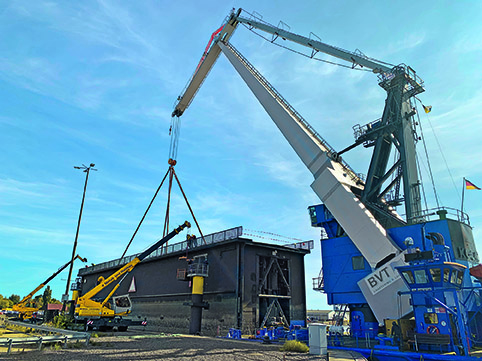
BREMEN/BREMERHAVEN. In September, the reserve gates of the Oslebshausen lock in Bremen and the Kaiser lock in Bremerhaven were undocked and moved into position on the same day after a stay in the dockyard. It started with the reserve gate of the Oslebshausen lock, which among other work had the retaining wall for flood protection raised at the Fassmer dockyard. A short time later, the same procedure was repeated for Gate 2 of the Kaiser lock, which will now be the reserve gate. It has been adapted to the new design of the lock at the Lloyd dockyard.

Photo: bremenports

More articles from the category Community News

ZDS and DGB welcome Ploß’s proposal on special funds

ZDS and DGB welcome Ploß’s proposal on special funds

HAMBURG. The proposal by Maritime Coordinator Christoph Ploß to extend the Infrastructure Special Fund to include seaports and waterways met with broad approval from the Central Association of German Seaport Operators (ZDS) and the German Trade Union Confederation...

read more
BLG LOGISTICS receives SBTi Validation Once Again

BLG LOGISTICS receives SBTi Validation Once Again

BREMEN. BLG LOGISTICS has once again had its climate targets officially validated by the Science Based Targets initiative (SBTi) – with significantly more ambitious reduction targets than those set during the initial validation in 2020.

read more
ZDS and DGB welcome Ploß’s proposal on special funds

ZDS and DGB welcome Ploß’s proposal on special funds

HAMBURG. The proposal by Maritime Coordinator Christoph Ploß to extend the Infrastructure Special Fund to include seaports and waterways met with broad approval from the Central Association of German Seaport Operators (ZDS) and the German Trade Union Confederation...

read more
BLG LOGISTICS receives SBTi Validation Once Again

BLG LOGISTICS receives SBTi Validation Once Again

BREMEN. BLG LOGISTICS has once again had its climate targets officially validated by the Science Based Targets initiative (SBTi) – with significantly more ambitious reduction targets than those set during the initial validation in 2020.

read more