REQUEST THE MAGAZINE

Logo German Ports
Magazine for ports, shipping and logistics

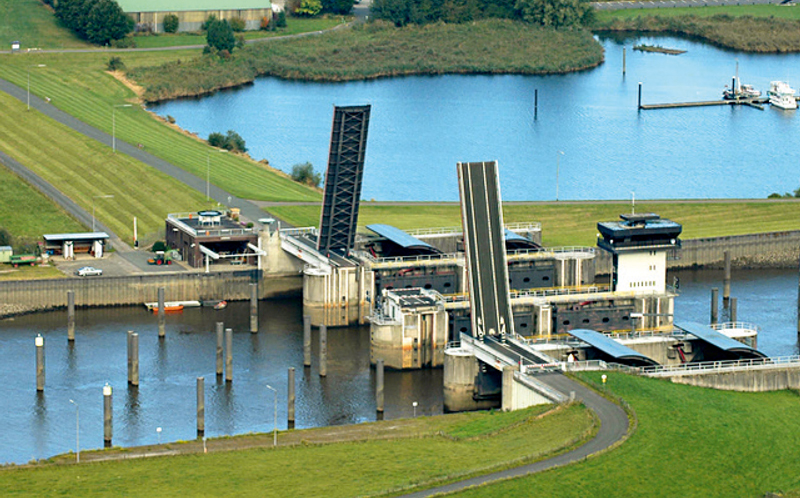
Modern control station

06.06.2024

ELSFLETH. Time has taken its toll on the control technology installed in 1979 at the Hunte-sperrwerk flood barrier, featuring four floodgates to protect the cities of Elsfleth and Oldenburg as well as parts of the Wardenburg and Bad Zwischenahn municipalities from flooding. To ensure optimal protection well into the future, the Lower Saxony Water Management, Coastal and Nature Protection Agency (NLWKN) is investing just under a million euros to update the large facility’s electrical engineering. The modern control system will enable, among other things, control via a computer workstation.

Credits: NLWKN

More articles from the category Community News

ZDS and DGB welcome Ploß’s proposal on special funds

ZDS and DGB welcome Ploß’s proposal on special funds

HAMBURG. The proposal by Maritime Coordinator Christoph Ploß to extend the Infrastructure Special Fund to include seaports and waterways met with broad approval from the Central Association of German Seaport Operators (ZDS) and the German Trade Union Confederation...

read more
BLG LOGISTICS receives SBTi Validation Once Again

BLG LOGISTICS receives SBTi Validation Once Again

BREMEN. BLG LOGISTICS has once again had its climate targets officially validated by the Science Based Targets initiative (SBTi) – with significantly more ambitious reduction targets than those set during the initial validation in 2020.

read more
ZDS and DGB welcome Ploß’s proposal on special funds

ZDS and DGB welcome Ploß’s proposal on special funds

HAMBURG. The proposal by Maritime Coordinator Christoph Ploß to extend the Infrastructure Special Fund to include seaports and waterways met with broad approval from the Central Association of German Seaport Operators (ZDS) and the German Trade Union Confederation...

read more
BLG LOGISTICS receives SBTi Validation Once Again

BLG LOGISTICS receives SBTi Validation Once Again

BREMEN. BLG LOGISTICS has once again had its climate targets officially validated by the Science Based Targets initiative (SBTi) – with significantly more ambitious reduction targets than those set during the initial validation in 2020.

read more